DIT 2026: Tosin Adegoke, Amina Khayyam, Husam Ibrahim – The Body at Sea
- Year
- 2026
- Partners
- Deadline for applications
Monday 23 February 2026
This open call is now closed. Applicants will hear back by the end of March.- Accessibility
- You can listen to an audio version of this webpage here.
You do not need a Soundcloud account for this! Just close the pop-up window by clicking the ‘X’ in the top right corner.
- You can listen to an audio version of this webpage here.
- Apply
Application Form
Download a Word doc version
Download a Large Text version
Listen to the audio version
What
This DIT project is a two-day experimental laboratory for six artists working across movement, sound, somatics and spiritual experimentation. Together, we will investigate whether the body can serve as a site to engage with archival absences – specifically with the erased histories of South Asian maritime labourers, historically referred to as lascars.
The Context
These seafarers were the coerced engine of the British Empire. Often recruited through systems of forced labour and debt bondage, they sustained global trade under brutal conditions, only to be systematically abandoned at East London’s Victoria Docks. Denied the means to return home, their presence remains an invisible yet permanent layer of the city’s history.
Many of these men originated from regions shaped by Islamic mysticism, where rhythm, breath, music and dance serve as conduits for metaphysical knowledge. While the British archive treats their lives as static data, this lab approaches the archives as a metaphysical field.
The Methodology
Drawing from these spiritual epistemologies, the lab will embody the archive with rhythmic repetition, collective listening and performance as modes of inquiry to sit with historical residue and archival absence. Amina Khayyam will draw on her expertise in trance-based Kathak and whirling dervish traditions to guide the lab.
The Why
As migrant narratives continue to be flattened into data and crisis rhetoric, this lab experiments with a counter-methodology. By reframing migration as an imperial inheritance rather than a contemporary emergency, the project situates current debates within a longer lineage of movement and survival. This shifts attention away from the immediacy of the present moment toward the endurance of the past, foregrounding the urgency of experimenting with decolonised research methods today.
Where
Activities will take place in person at Artsadmin, Toynbee Studios, 28 Commercial St, London E1 6AB.
When
Saturday 5 – Sunday 6 September 2026.
Timings to be confirmed.
Who
We are seeking six artists/practitioners who demonstrate a clear interest in and potential to benefit from the lab. No prior experience in professional movement, dance, or sound is required.
Applicants should be able to articulate what they hope to gain from the process – whether skills, networks, research development, creative growth, or community connection – and how participation aligns with their current practice or interests. Artists do not need prior knowledge of Sufi traditions or spiritual practice to apply.
The lab welcomes performance-based artists and practitioners working across live art, theatre, dance, music, ritual, embodied practices and interdisciplinary forms. Applicants may be emerging, mid-career, or established, provided they are open to sharing methods, learning from others and engaging in collaborative, process-led and experimental ways of working.
The lab prioritises South Asian artists/practitioners or artists/practitioners from the South Asian diaspora, and individuals who have a meaningful connection to East London. This may include living, working, researching, or creating work in the area, or maintaining an ongoing relationship with its communities, histories, or cultural landscapes. Eligible applications received from individuals who fit these categories will be reviewed first, in seeking to fill the six spaces.
Participating artists/practitioners should be willing to engage in a collective learning environment grounded in care, curiosity and mutual respect. This includes openness to sharing practice, participating in group experimentation and learning alongside artists, thinkers and community members from different disciplines and traditions, including maritime, seafarer and Sufi lineages.
What to expect
This section offers an indicative outline of how the two days may unfold, giving a sense of the pace, atmosphere and types of engagement participating artists/practitioners can expect. The structure remains flexible and may shift in response to the group.
Day 1: Grounding, Archives, and Attunement
Day 1 focuses on establishing a shared rhythm and point of reference. Grounded in the Sufi framework of adab – a practice of care, deep listening and right relation. The day supports a slow arrival into both the material and the group.
- Arrival & grounding: The lab begins with grounding and intention-setting over shared chai. This is a space to arrive, meet one another and settle into the lab’s principles of collective practice and care.
- Meditation & movement: Participating artists/practitioners move into meditation and movement-based exercises designed to anchor the body and settle attention, establishing a somatic container that supports the research process.
- Deep listening archival encounter: We are introduced to selected maritime archival fragments – ship logs, legislation and oral histories. In collaboration with Amina Khayyam, we engage with these materials through Sufi sama-inspired attunement – using breath, voice and rhythm, the group explores ways of sitting with archival absence, moving beyond analysis toward embodied resonance.
Day 2: Collective Experimentation and Research Through Practice
Day 2 builds on the questions established on Day 1, shifting toward collective experimentation and research through the body.
- Three overlapping sites: The research is organised around an arc of three interconnected sites: Homeland, Ship and Labour, and East London. These are approached as spatial and experiential conditions that shape rhythm and movement, rather than narratives to be reconstructed.
- Metaphorical knowledge: South Asian Sufi seafaring music is introduced alongside metaphorical knowledge that understands the ocean as a space of passage, loss and endurance. Participating artists/practitioners are encouraged to bring elements of their own practice into this structure, allowing different methods to intersect through collective experimentation.
- Closing & synthesis: The lab concludes with shared reflection, gathering insights from the process and considering how these decolonised research approaches might inform future artistic or research trajectories.
The lab will move between encounter and experimentation, with shared pauses for reflection, snacks and chai.
Access
- Physicality: The lab includes movement-based and somatic practices. All activities are adaptable; there is no requirement to stand, move continuously, or participate in every physical exercise.
- The Building: Artsadmin is wheelchair accessible with lift access to all floors.
- Sensory & rest: Earplugs and quiet spaces for decompression can be accommodated. Regular breaks are built into both days, and participants are welcome to take additional rest as needed.
- Nourishment: Shared chai and light snacks will be provided throughout.
A small access budget has been reserved to support the group. Artists’ access needs will be requested after selection, and the budget will be used to adjust activity to fit with the needs of the group where possible. We may not be able to cover each individual’s access requirements, this will depend on the final group and costs. If you would like to discuss this before applying, please email [email protected].
Travel & Accommodation
Practitioners based outside of London are welcome to apply, but they are responsible for their own travel and accommodation.
About the Artists
Tosin Adegoke (he/him) is a London-born Nigerian artist working across workshops, sculpture and film. His practice engages archives and material memory, tracing histories of migration, labour, and Global Majority cultures through documentary work about seafarers.
 Tosin Adegoke. Image Marc James
Amina Khayyam (she/her) is Artistic Director of AKDC whose most recent work includes Ghost Ships – a co-production with Icon Theatre and ZooNation. Amina choreographed the section that explored colonial violence through trance and collective movement.
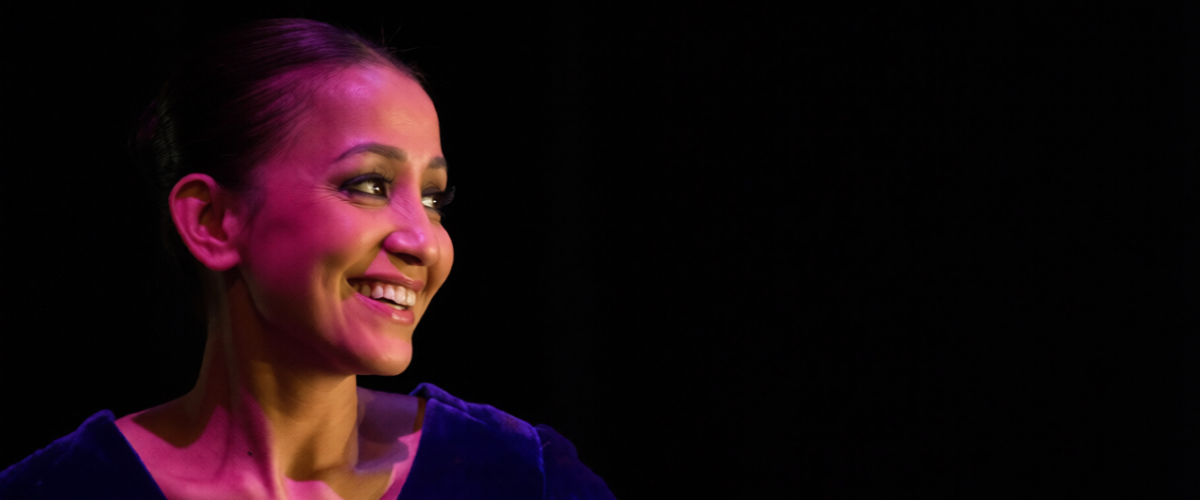 Amina Khayyam. Image courtesy of the artist
Husam Ibrahim (he/him) is a South Asian documentary filmmaker whose work bridges journalism, ritual and experimental art. Drawing on his background with refugee communities and family history of labour migration to Dubai, he explores belonging and displacement.
GOKE Studio, run by Husam Ibrahim and Tosin Adegoke, facilitated community workshops translating archival research into site-specific experiences, including a guided walking tour and virtual soundscape on lascar histories.
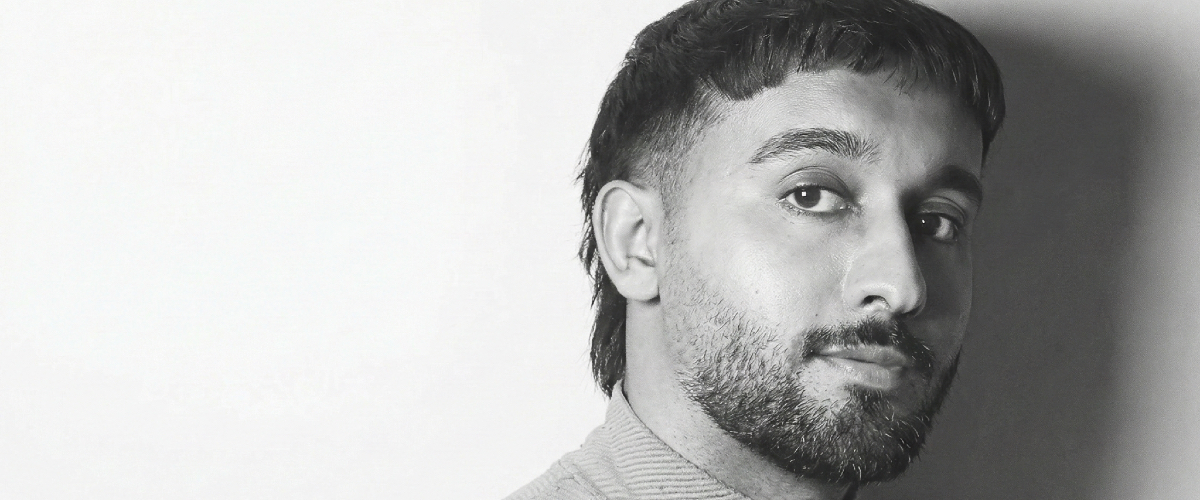 Husam Ibrahim. Image courtesy of the artist
How to apply
- Application Form: Each DIT has a different online application form, depending on the needs of the project. You can find the link to the online Application Form, Word and audio versions at the top of this page.
- Alternative formats: We accept written, video, and audio applications. For video or audio applications, please answer the questions listed in the Application Form within a recording of 5 minutes. Send the file to [email protected].
- Access: We cannot provide or pay for access support to help with writing or preparing the application. Should you need support accessing or submitting the application, please contact us using the phone or email details below and we will be happy to help.
- Further questions/support: Please see the FAQs, email [email protected] or call us on 020 8985 2124.
Banner image credit:
Three Lascars. Image credit Waterline Collection, National Maritime Museum
Also
FAQs for Participating Artists
A list of frequently asked questions covering all aspects of the DIT application process
Read moreDIT 2026: Stacy Makishi – Campfire Disco!
Death & doom is everywhere. The question isn’t whether we’re facing the edge; the question is how do we make it meaningful? The Answer: Campfire Disco!
Read moreDIT 2026: Paula Varjack – The LABUBU EFFECT
This three-day workshop invites 8 artists to investigate contemporary cultures of consumerism — from hype drops to independent boutiques, from resale markets to ‘cute’ collectable unboxing TikTok’s — as sites of live performance.
Read moreDIT 2026: Gillie Kleiman – Disciplined
We often talk about Live Art as not belonging to any discipline. Disciplined will explore ways in which relating to existing disciplines can be a curse and an opportunity.
Read moreDIT 2026: Sweætshops® and Kwasu Tembo – Prove Your Human
A wordless weekend trip exploring altered states of consciousness in opposition to the large-scale language models of artificial intelligence by forgoing the use of language for several days.
Read moreDIT 2026: Rosana Cade and Moa Johansson – Make FUNding FUN again
A month-long workshop exploring playful, collective-focused alternatives to art funding systems in the UK as an urgent response to the dire situation.
Read moreDIT 2026: Jo Hellier – Birth the Musical
A three-day workshop for pregnant people and people who have recently given birth to explore the weird and world-bending metamorphosis into parenthood.
Read more