Meeting Points – Artists in Residence 2025
Last year, we piloted an Artists in Residence programme, inviting three artists Samra Mayanja, Claudia Palazzo and Symoné to be connected with LADA over 9 months.
As part of the residency, the three artists were invited to develop alternative peer-to-peer gatherings in relation to their own on-going research and practice. They explored ideas and methodologies in dialogue with other makers and thinkers, the LADA team and materials in the Live Art Research Collection.
To mark the end of the residency, LADA’s Director, Mary Osborn, spoke to the three artists together, reflecting on their different residency activities and their relationship with discipline, community and visibility.
Mary Osborn:
You all expressed a desire to be working, speaking, or collaborating across disciplines. What does discipline mean to you in relation to live art practice, and how did this play out in your residency activity?
Symoné:
My year was spent thinking about the interdisciplinary crossovers between technology and performance art. That was not just having conversations and researching, but also, spending time in LADA and researching who’d been doing this in the past. I’m interested in connecting with where I started out as a performer in club spaces, and thinking about alternative ways that this kind of work can exist. If I were to define discipline, it’s about art form. Form in itself is a part of it, but also your own relationship to that form as a person, an artist, and how you work.
Claudia Palazzo:
I really wanted to work with people who have different practices to me, and different obsessions, who are disciplined in a different way. I don’t necessarily associate discipline with training. I think that discipline is the pathway to freedom, which sounds a bit hippie, but that’s not actually me. I wanted to work with people who make solo work, and try to figure out together how we can have honest, meaningful, conversations and feed into each other’s practices, and if and how we can do that when we don’t speak the same language of discipline.
Mary:
It makes me think about the connection between the word discipline and disciple. I’m curious about the way disciplines form over time, starting out more nebulous before becoming defined, and developing disciples.
Samra Mayanja:
The residency gathering that I held was a day in the Study Room for performance practitioners, across live art, performance art, club performance, musicians, dancers, really across the spectrum. I was trying to understand what benefit an archival investigation brings to other people’s work.
LADA’s collection is a resource that I find infinitely useful, not only for my work, but for me, and I wondered what it would do for others.
I’m following that thread from discipline to disciples to finding what I would term as, all of the weirdos together, and finding a language so that the people who need to be in the room can find you.
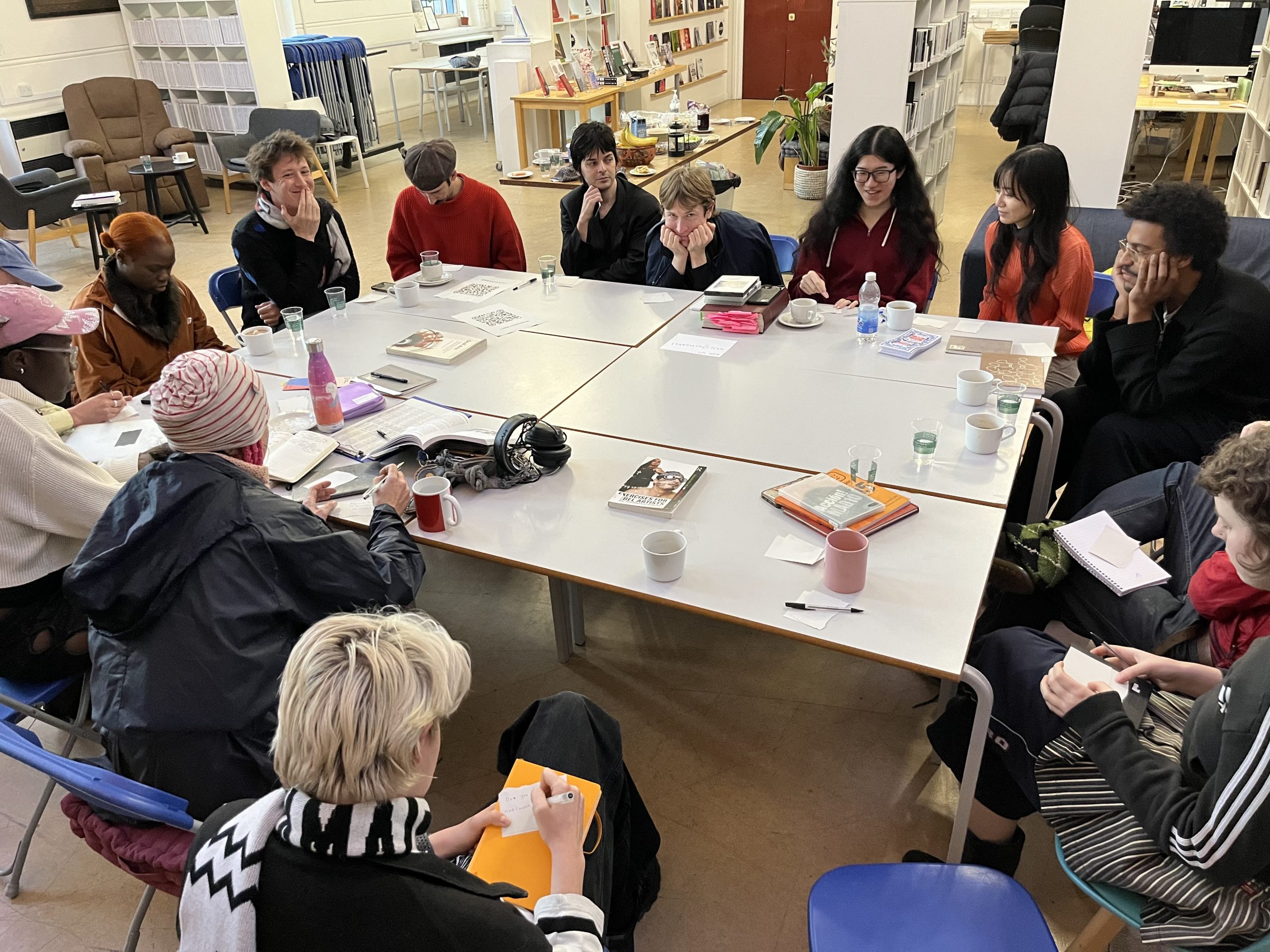
‘I’m not solely interested in what my practice is, but what is my practice within the context of others, and what is this context, and what is this moment?’
Mary:
I remember our conversation, Claudia, about being knocked back from applications on the basis of not being ‘x discipline enough’. The feeling that you are not only excluded from the opportunity, but excluded from the entire discipline. Our hope is that the Live Art Research Collection can be a meeting point for artists from multiple disciplines – who are interested in liveness as a way to push, play or take a risk at something, including form.
Claudia:
Live art is kind of like this meeting point of people that are doing something quite specific, but it doesn’t fit in with anything else that is recognisable. It’s not that you’re not a natural fit, or an obvious fit, but what you’re doing is actually quite specific. It’s just not that easy to explain, or for other people to recognise instantly. That was probably what I had in common with all the other artists who I gathered as part of my residency. Everyone didn’t quite have a natural home somewhere.
Symoné:
I’m curious about that, and if the artists were able to articulate what they do to one another, or did it take a while to build understanding?
Claudia:
It took a while, it probably was too ambitious in the short time (the group met four times over four months). After a few weeks, it did start to really work, and connections formed. Some people were using liveness in a way that I hadn’t even considered.
We all got something from each other, and we are continuing to meet up and chat, but this kind of thing is a slow burn.
I’m interested, did you pick the specific premise for your residency, and then gather other artists who were interested in that specific thing?
Symoné:
I did – I was working specifically with the crossovers of live art and gaming. Similar to you there were people who related to the description, but were doing something completely different, outside of my skillset, or how I would describe myself or work. The meeting point was an interest in interactivity and technology. I ended up with a mix of people – someone that works in games, a games writer, people who work with robotics, and visual artists. It felt at times like we were speaking the same language and at times we weren’t, but we were sharing new ways of thinking.
Mary:
I’m curious, Symoné, if you relate to what Claudia said about ‘speaking the same language of discipline’, and the challenges of writing about your work so that the invitation reaches both gamers and performance makers?
Symoné:
It sometimes feels complicated. I want to make sure that enough people understand that what I’m doing is real and be able to find the language that others are using so that it makes sense in institutions’ minds, because it is a lot of decoding. This didn’t feel like so much decoding. It was just a matter of being multilingual with different groups. It was a really useful process, to experiment with speaking through multiple voices.
Mary:
I really like what you said about wanting institutions to know that what you are doing is ‘real’ which also speaks back to discipline. I was just thinking about the theme of your residency gathering Samra, ‘please believe me…’. Could you say more about that?
Samra:
I was thinking about the phrase, “please believe me” because there’s something within performance that for me is about being believed and being disbelieved. It’s about deceit, and it’s also about concealment and moments of revealing. Performance documentation is a space in which that can be complicated and I’ve seen that in quite a few works in the archives.
I also arrived at the residency as someone who was really over applying for certain things. I would apply for stuff and people would say “there’s nothing wrong with your application, but ultimately someone else needs this more than you”. People are making assessments based on need, and there’s a certain language around my work that I don’t want to fall into as a means to get resources. So I had to step back from applying to certain things. I felt like it’s time to make my own world, my own space. The residency was a moment to bring together people that I have been working with, but we’ve not had time to sit together really deeply in a way that is solely reflective, just a moment to reflect and nourish the practice.
Mary:
We have been thinking about how to support artistic communities to keep risk alive. Institutions have a responsibility to keep the ecosystem resourced for artists, but community and peer support is where real risk is encouraged. With each of you, we also talked about a desire for more community – relationships between peers that support risk or experimentation, or just keep us going in a climate of scarcity. How did that play out for you in your residency activity?
Symoné:
There were about twelve of us in the Live Art & Gaming Network, from across the country that had some form of relationship to interactive performance or playable games. We spent two days together.
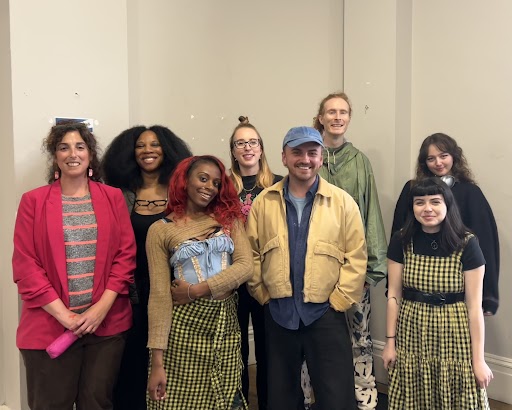 Live Art & Gaming Network, 2025
‘It felt at times like we were speaking the same language and at times we weren’t, but we were sharing new ways of thinking.’
Symoné:
It felt really powerful for us to carve out this time, come together, play games, talk about games, make games, not finish them. And not be precious. It was a really low-key place to experiment. When I’m not in spaces like that, it feels like I’m thinking about deadlines and the public presentation side of it, but to actually carve out time to meet people and play and remind myself why I’m excited about what I do. It does mean a lot. I want to take more time to experiment and take risks.
Mary:
Yeah, the nature of play is that it’s about the moment, and that moment you created through the game jam served itself. I love that you didn’t have to finish the games.
Samra:
I realised during the residency that the artists that I’m most interested in are those that are actively cultivating communities and actively supporting other people’s practices. I’m not solely interested in what my practice is, but what is my practice within the context of others, and what is this context, and what is this moment?
I like people who are activating projects and initiatives and happenings and one-off moments.
Claudia:
I really resonate with what Samra is saying, and what you said earlier about applications too. I’ve had 23 application rejections in a row, so with this residency, I really felt like I’d spent too much time on my own trying to explain myself on a form. It was really refreshing and a shake-up to be with artists who mostly don’t give a fuck about this tiny bubble that I’m in.
I want to be able to have conversations that are maybe a bit difficult, especially around access and control in relation to our bodies, but it can sometimes feel like that can’t happen, or it’s too hard to talk about. I wanted to be able to have these sorts of chats, to get outside of my immediate environment, and the non-stop filling in of forms, which are asking you how you’re going to change the world, and go into every community and be some sort of healer.
Mary:
What really struck me from what you said Claudia, is that community is deeply necessary to support and activate one another, take risks and play, but that criticality, difference and integrity is also fundamental to community support frameworks. I wonder if the feeling of being unable to disagree, or critically push each other through different perspectives, is a direct result of the scarcity climate that makes everything hyper precious. It’s really interesting to me that by reaching beyond your immediate discipline or community, there might be more possibility to have different opinions, and that be okay.
Claudia:
Yeah, I really wanted to interrogate whether I am making my own decisions or whether I am censoring myself in my work.
Symoné:
I’ve been thinking about self censorship a lot too. I admire real honest communication, it’s something that I look for in collaboration. That’s when you connect, when someone says something that they’re really thinking and not just what they think you want to hear, it’s such a relief. It’s really powerful to hear that’s how you all are desiring to communicate too.
Claudia:
Yeah, trying to. It was quite ambitious, and a lot of us were quite shy, but we had snacks and a drink, and that helped. But it takes time to build trust in a community where we didn’t know each other.
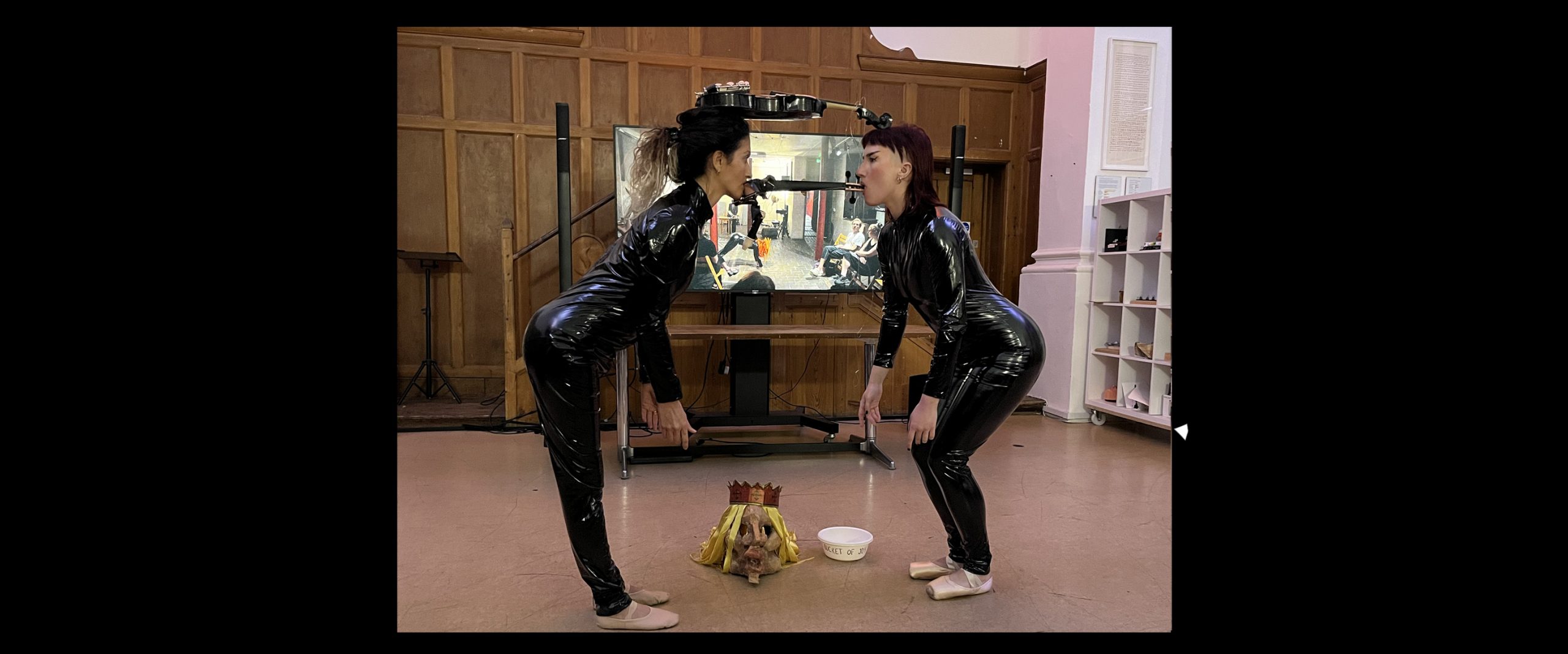
‘I really wanted to work with people who have different practices to me, and different obsessions, who are disciplined in a different way.’
Mary:
I’m wondering how both discipline and community also relate with something we’ve talked about a lot Claudia, visibility? What is the work we want to do without anyone watching, and what is the work we want people to be present for?
Claudia:
Often the places where we gather are public spaces, at a bar or performance event, and it’s difficult to actually have considered exchange, and peer mentoring. I wanted to take this group away from the immediate public-public space, but still have it held in something that was slightly visible, so it’s like, we’re all doing this thing, you’re not invited, but we’re doing it. People have asked me about it, and have asked the other group members. It’s given us a way to be able to have those conversations on a wider scale, because people know that we’re having them. Even though they’re not coming to watch anything. I’m interested in archiving invisible work. I’ve done a lot of work that has never been seen, and there’s no evidence that I’ve done or am doing anything other than in my own head.
Symoné:
I like that phrase, slightly visible. That’s also what I’m interested in. Places, whether online or in person, that people can attend and meet people who are working at this experimental intersection of games, art, and performance. That low-key atmosphere is really important. Getting together, trying things out helps promote some exciting conversations and relationships. It’s not too private, it still invites people. At the same time, I do get excited when I have conversations with friends or people I’ve met, and they’ve not heard about alternative or indie games, and they’re interested. There are people who are doing that work to make it more visible so it is not siloed.
Mary:
The flipside of the closed door is that we meet brilliant artists, and are then left with this frustration of wanting everyone to see their work! It goes back to scarcity again. If the ecosystem is thriving, then you can have more work happening in the invisible or slightly visible spaces, because there are enough publicly visible opportunities to balance it out.
Claudia:
That thing of being able to sit in difficulty, in the unknown is quite necessary for artists rather than to just hit the relief button, or go for the quickest thing. I also think, in terms of visibility, what I have noticed is that the grassroots scene and underground scene is having a massive revival, that feels more like the scene I started out in.
There’s this whole other counter cultural thing going on that offers a different form of visibility and learning from each other. One where risk and vulnerability feel more equally held and there’s less defined lines between artist and programmer.
Samra:
The invisible work that I feel really committed and excited about is also bringing more artists together. To go back to Claudia’s point about discipline in relation to training and untraining, I like to think of that time as a form of training, or a sort of attunement. To ask, what is it that you’re interested in that you didn’t know, that isn’t in your feed, or algorithm, isn’t being fed to you, but is what your eyes were drawn to, like the colour of a spine, or the name of a title, or an artist you’ve never heard of. I feel very excited about that sort of invisible work with artists that I’m connected to intimately, and seeing what it looks like to bring more people into that. And I don’t know how to bring these people into the fold, but it might just be a case of, you know, bringing your housemate, who’s a doctor or a therapist, or works in a coffee shop.
I spend a lot of time in archives, specifically film, arts, moving image and performance archives. During the residency period, I was starting to feel more and more interested in this community of people that are interested in documenting how people express themselves through their bodies. Performance archives and the importance of them, not just for artists, but for humanity. A lot of the artists at my gathering said this was their first experience of an archive or collection and that they got a lot from it, and now we’re going to start going to different archives together. The next one will be the V&A Storehouse.
Mary:
This reminds me of a talk we were recently at with Alice Parsons, founder of Castles in the Sky and leading on Bradford’s LGBTQ+ community archive, where she said, ‘the archive is working to keep the community present’. It is important to us that the Live Art Research Collection remains a living resource that serves an ever-evolving community – but we need the community to be present for that to work.
Which leads me to our final question: If you could choose one item, book or document of a performance for LADA to hold in the Live Art Research Collection, what would it be?
Samra:
I would choose Pedro Lambell’s My Tender Matador. I’m really loving performance artists that also write at the moment. There’s a very particular sensibility, it makes literature more alive.
Claudia:
I’ve been reading Where is Ana Mendieta? by Jane M. Blocker. It’s about identity, performance and exile.
Symoné:
The Queer Games Avant-Garde by Bo Ruberg. This is a book of interviews from brilliant artists from all over the world, some describe themselves as game designers or developers, some have their own definitions. I’ve played some of their games online. They’re very experimental and very personal pieces, and I love getting inside people’s heads and obsessions.
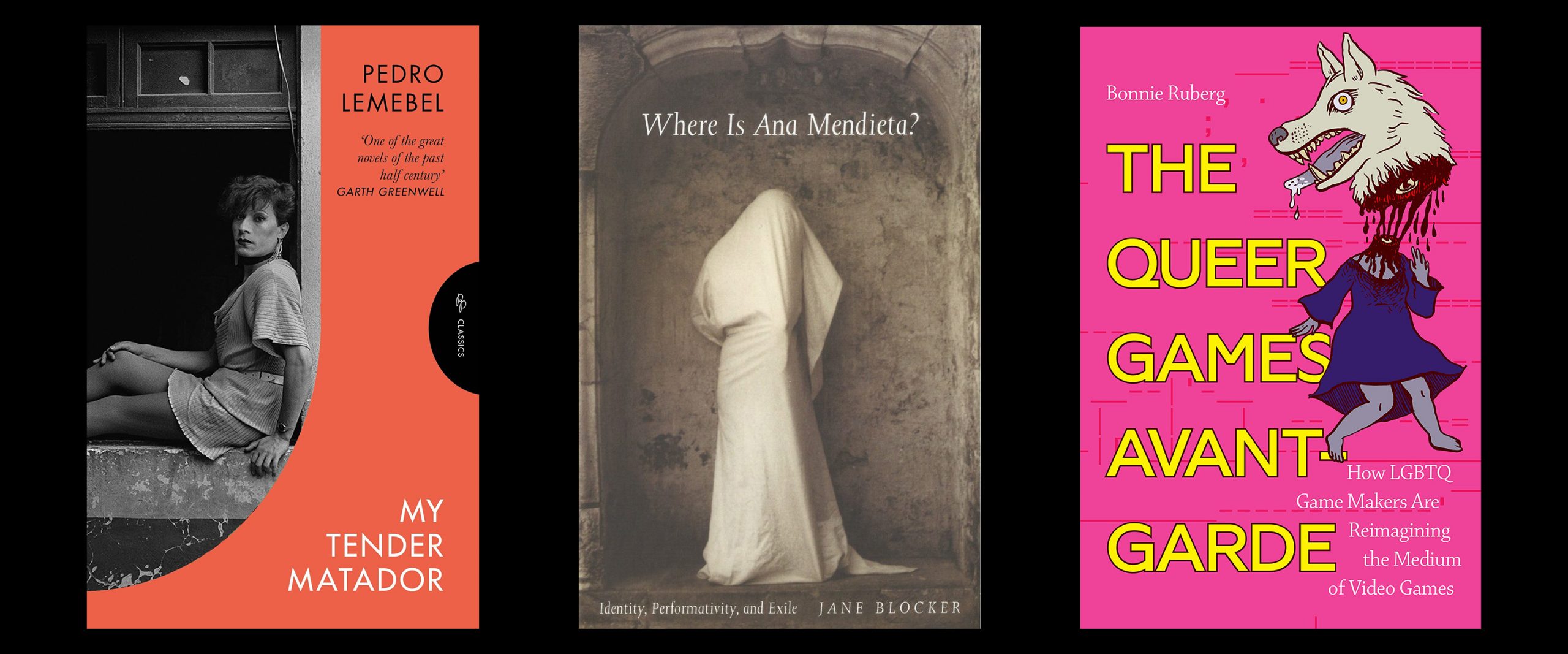
Banner image credit:
Samra Mayanja, The Call Centre, 2024. Image by an audience member
Claudia Palazzo, image by Zbigniew Kotkiewicz
Symoné, image courtesy of the artist
Also
Samra Mayanja and Riot + the Ether – THE CALL CENTRE
Artist in Residence Samra Mayanja curates a special edition of THE CALL CENTRE co-presented with Newington Green Meeting House.
Read moreSamra Mayanja – SCREAM CHOIR
SCREAM CHOIR is led by Samra Mayanja, who has initiated two impromptu SCREAM CHOIR events in the past. For this edition, Samra will be joined by Mary Osborn (Live Art Development Agency) and they will focus on stories of the voice, vocal improvisations, speaking, screaming and listening.
Read moreSamra Mayanja – Artist in Residence
In March 2025 we welcomed Samra Mayanja, Claudia Palazzo and Symoné as Artists in Residence.
Read moreMonica Ross: A Symposium
Speakers who knew Monica Ross personally will explore her contributions
Read moreFundraising Resource Handbook
Artsadmin, Home Live Art and LADA worked to develop a free online Fundraising Resource Handbook
Read moreReimagining Care: 200 Questions About Care by Rubiane Maia
Rubiane Maia’s 200 Questions about Care were developed out of her research as part of the six-month residency Reimagining Care.
Read moreReading Performance Art From Then Till Now
A debate as part of Whitechapel Gallery’s A Short History of Performance season.
Read more